
Preparing Materials Before Keychain Production
Material preparation begins after the product design and purchasing requirements have been reviewed. This stage affects the keychain’s dimensions, weight, strength, color, surface appearance, logo result and compatibility with the selected hardware.
Arvexin Keychain prepares materials for metal, soft PVC, rubber, acrylic, leather, silicone and LED keychain projects. Each material requires a different production route, so preparation follows the approved artwork, drawing, reference sample or written order specification.
Before sampling or production, we confirm the material, size, thickness, colors, logo method, surface finish, accessories, packaging and order quantity. Buyers who have not finalized these specifications can review our material and size customization options before development starts.
Material Selection for Different Keychains
Metal keychains may use zinc alloy, stainless steel or aluminum. Zinc alloy is commonly used for molded shapes, raised details and heavier constructions. Stainless steel and aluminum can be considered for flat, cut, engraved or lightweight designs.
Soft PVC, rubber and silicone are prepared according to the required flexibility, color separation and 2D or 3D structure. Acrylic sheets are selected by thickness, transparency, printing method and cutting requirements.
Leather and PU leather are checked for thickness, surface texture and suitability for embossing, printing, stitching or hardware assembly. LED keychains may also require plastic housings, batteries and internal functional components that match the approved construction.
The selected material must be compatible with the intended logo process. Laser engraving, printing, embossing and molded logos require different material surfaces and preparation methods.
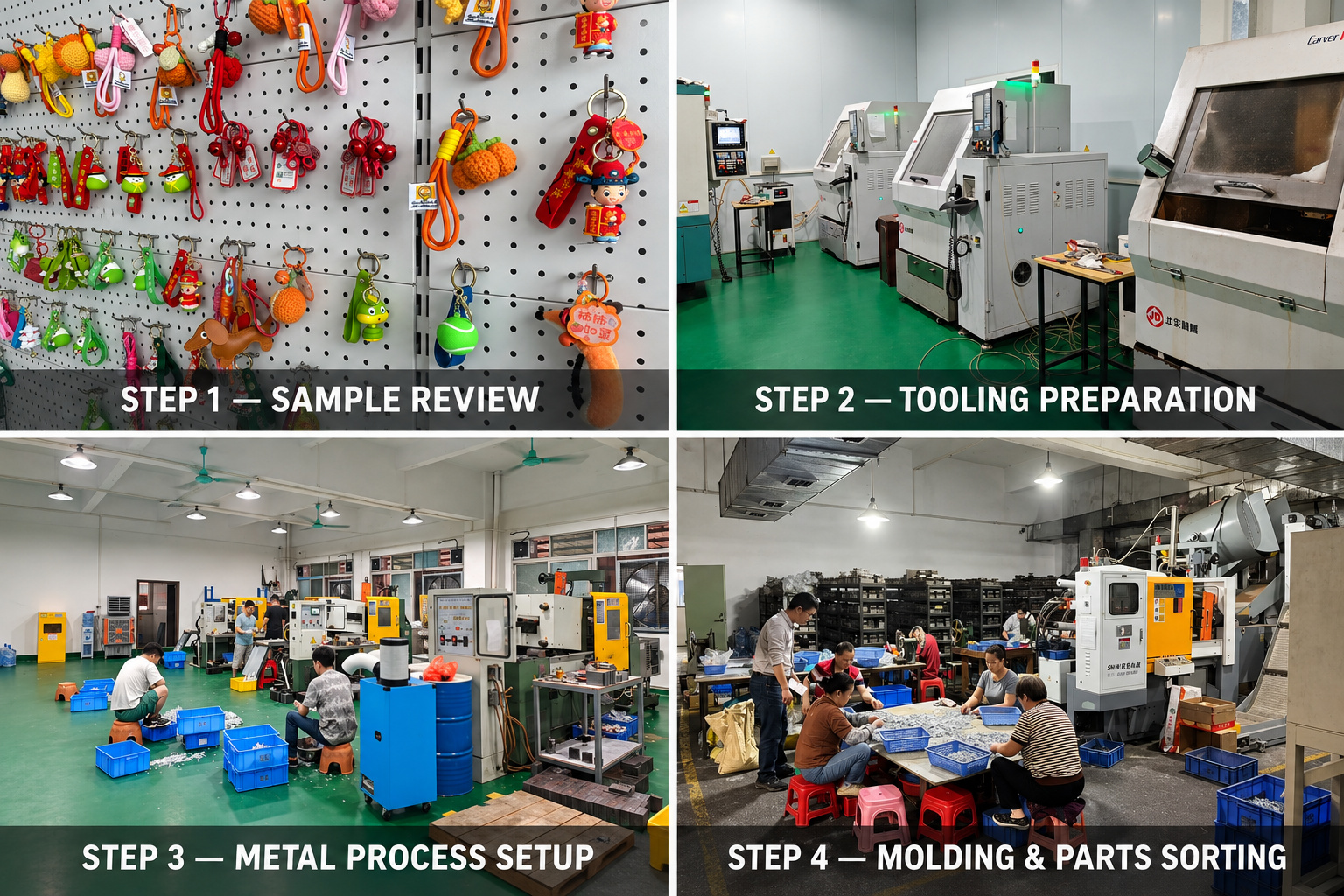 Dimensions, Thickness and Product Structure
Product dimensions should be confirmed before cutting, casting or molding. The drawing normally identifies the overall length, width, thickness, attachment position and important front or back details.
If the product uses a key ring, chain, connecting ring, lobster clasp or swivel hook, the size and finish of these parts should also be specified. Attachment positions must provide enough space for secure assembly without damaging the keychain body.
Material thickness affects weight, rigidity, molding detail, printing appearance and packing volume. Molded items may require allowances for shrinkage, finishing and assembly. Acrylic and flat metal designs need sufficient edge spacing around the attachment hole to reduce cracking or deformation.
Products requiring dedicated molds proceed to mold and tooling development after their dimensions and construction are approved.
Color and Surface Preparation
Pantone references or approved physical samples are recommended when accurate color matching is important. The same color may appear different on metal, PVC, acrylic and leather because each material reflects light and displays texture differently.
Metal projects may require confirmation of plating, polishing, matte, brushed or other suitable finishes. PVC and rubber designs may contain several separately prepared colors. Acrylic keychains depend on the supplied artwork, material transparency and whether the design is printed on one or both sides.
A material color sample or completed pre-production sample can be used as the reference for bulk manufacturing. For repeat orders, the previous approved sample should be reviewed together with the written specification.
Incoming Material and Component Checks
Incoming materials and purchased components are checked before entering production. Depending on the product, inspection may cover:
- Material type and required construction
- Sheet, leather or component thickness
- Color and visible surface condition
- Dimensions of key rings, chains and fittings
- Compatibility with molding, cutting or logo processing
- Quantity required for the planned production run
Materials with incorrect colors, unsuitable dimensions or obvious surface defects should be separated before processing. Early checks help reduce avoidable differences during die casting and injection molding, printing, finishing and assembly.
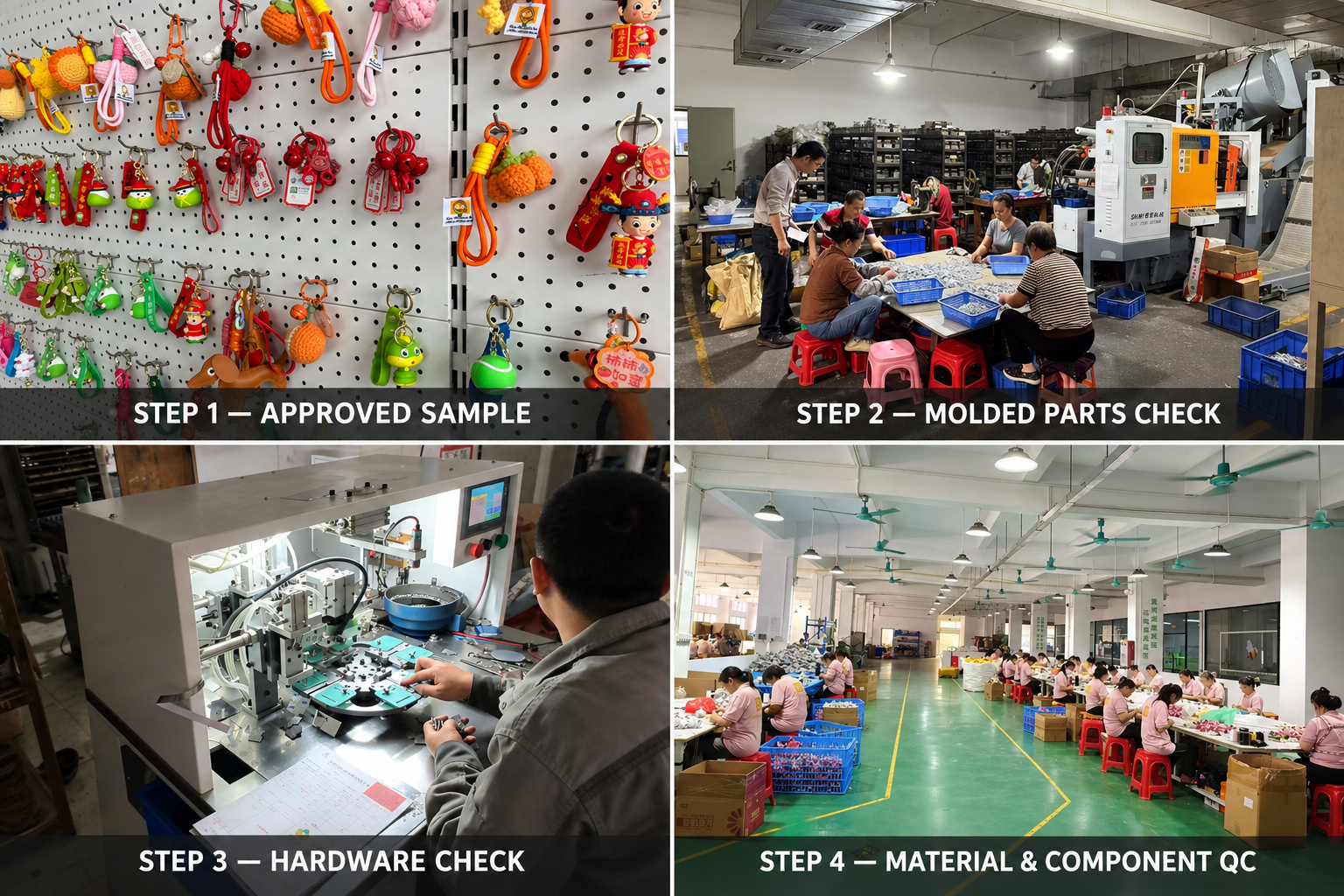 Sample Materials and Production Approval
Sample materials should represent the intended bulk order specification as closely as practical. If a temporary material, color or substitute component is used during development, the difference should be identified before sample approval.
During confirmation, buyers should check the material feel, dimensions, thickness, weight, color, logo result, surface appearance and accessory fit. Changes requested after approval may affect tooling, material purchasing, sample cost and production time.
After approval, the confirmed material, dimensions, colors, logo method, accessories and packaging requirements are transferred to the bulk production specification. These details become the reference for purchasing, manufacturing and inspection.
MOQ, Samples and Lead Time
Standard custom keychain orders normally start from around 500–1,000 pieces per design. Special materials, custom colors, new tooling, complex structures or private label programs may require a higher MOQ.
Custom samples usually require around 7–15 days, depending on material availability, tooling and design complexity. Bulk production normally requires around 25–40 days after the sample and written specification are approved. Actual timing depends on the order quantity, material, processing methods and finishing requirements.
Information Required for Material Review
For an accurate quotation and material assessment, buyers should provide:
- Artwork, drawing, reference image or physical sample
- Required dimensions and product construction
- Preferred material and thickness
- Pantone colors or physical color references
- Logo and surface finish requirements
- Key rings, chains and other accessories
- Packaging requirements
- Estimated order quantity
- Destination and required material testing
If the material has not been decided, send the intended application, required appearance, estimated quantity and budget direction. We can review suitable material options and identify the requirements for sampling, tooling and bulk production.