
 Keychain Manufacturing in Dongguan, China
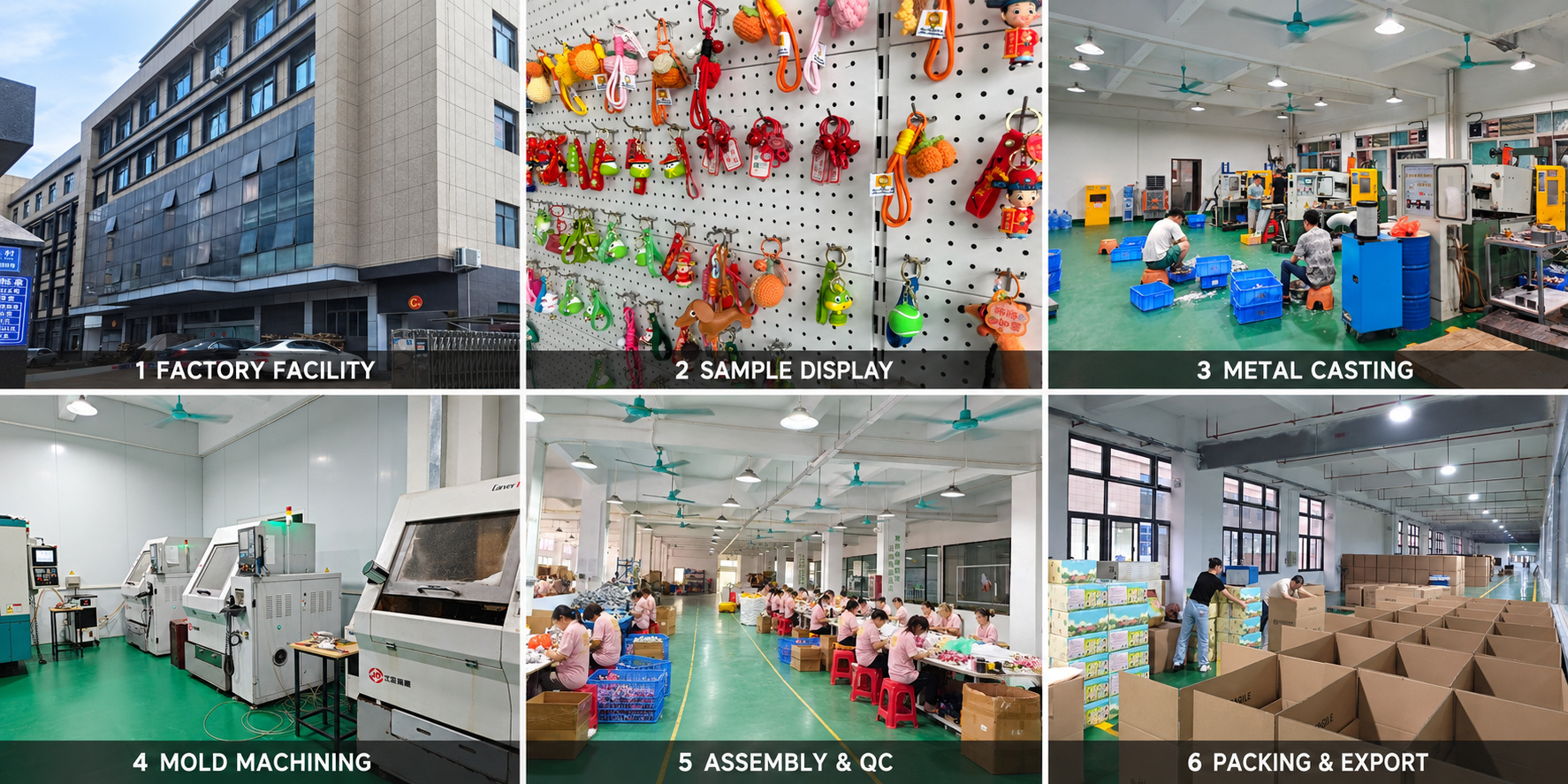
Arvexin Keychain manufactures metal, soft PVC, acrylic, rubber, leather and LED keychains for importers, promotional product distributors, gift companies, retail programs and wholesalers. Our facility is located in Hengli Town, Dongguan, Guangdong, China.
Established in 2012, the factory covers approximately 6,200 m² and operates around 5–6 production lines. Approximately 80–120 employees support production, inspection, packing and international order coordination.
Monthly production capacity is normally around 400,000–700,000 pieces. Actual output varies according to the material, product construction, finishing process, packaging requirements and order mix.
Our manufacturing workflow covers product development, tooling, forming, finishing, logo processing, assembly, inspection, packing and export preparation. Each custom order is produced according to approved artwork, samples and written specifications rather than a general product description.
Production Starts With Confirmed Specifications
Before materials or production arrangements are released, we review the product type, dimensions, construction, artwork, colors, logo method, accessories, packaging, quantity and destination.
Different keychain materials require different production routes. A die-cast metal keychain cannot follow the same process as a printed acrylic keychain or a molded soft PVC design. The manufacturing method is selected after the design, material and intended result have been reviewed.
Custom samples normally require around 7–15 days, depending on the material, tooling and design complexity. The approved sample and specification become the production reference for the bulk order.
Material Preparation and Incoming Checks
Materials and purchased components are checked against the confirmed order requirements before production. Depending on the product, materials may include zinc alloy, stainless steel, aluminum, soft PVC, rubber, acrylic, leather, silicone, key rings, chains and other accessories.
The material must be suitable for the required construction, appearance, logo method and finish. Metal thickness, PVC color, acrylic clarity, leather surface condition and accessory specifications can all affect the final product.
The preparation process is explained in more detail on our Material Preparation page.
Mold and Tooling Development
Products with custom molded shapes may require dedicated tooling. Before mold development, we confirm the overall length, width, thickness, front and back details, raised or recessed areas, color separation and attachment positions.
Tooling should not be released from an unclear reference image alone. A suitable drawing must define the construction and dimensions clearly enough for sample development.
After the tooling is prepared, trial parts are checked for shape, dimensions, relief, edge condition and attachment position. Adjustments are made before the sample is submitted for approval when necessary.
More information about drawing confirmation, tooling and first samples is available on our Mold & Tooling Development page.
 Forming and Main Product Processing
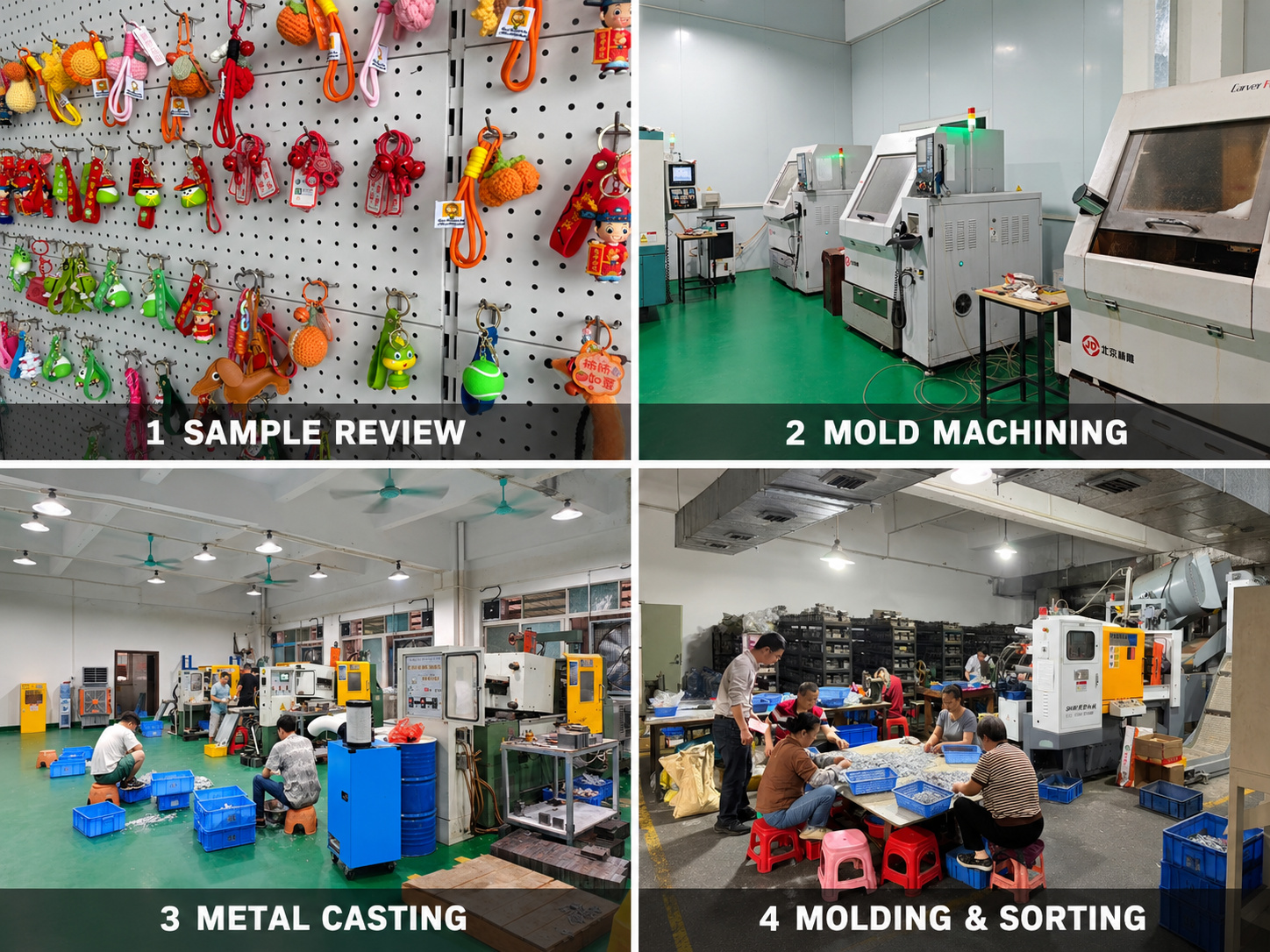
Metal keychain bodies may be produced through die casting, forming, CNC engraving or other suitable processing according to the design. Molded soft PVC and rubber products use injection or molding processes to create the confirmed shape, thickness and relief.
Acrylic products generally require cutting and printing. Leather and PU leather keychains may involve material cutting, embossing, printing, stitching and hardware fitting. LED keychains require suitable housings, internal components and functional assembly according to the confirmed design.
During forming, dimensions, shape, hole position, relief and component fit are checked against the approved specification. These details affect whether the later logo, surface finish and assembly processes can be completed correctly.
Our Die Casting & Injection Molding page explains how molded metal, PVC and rubber components move from tooling into repeatable production.
Logo Processing and Surface Finishing
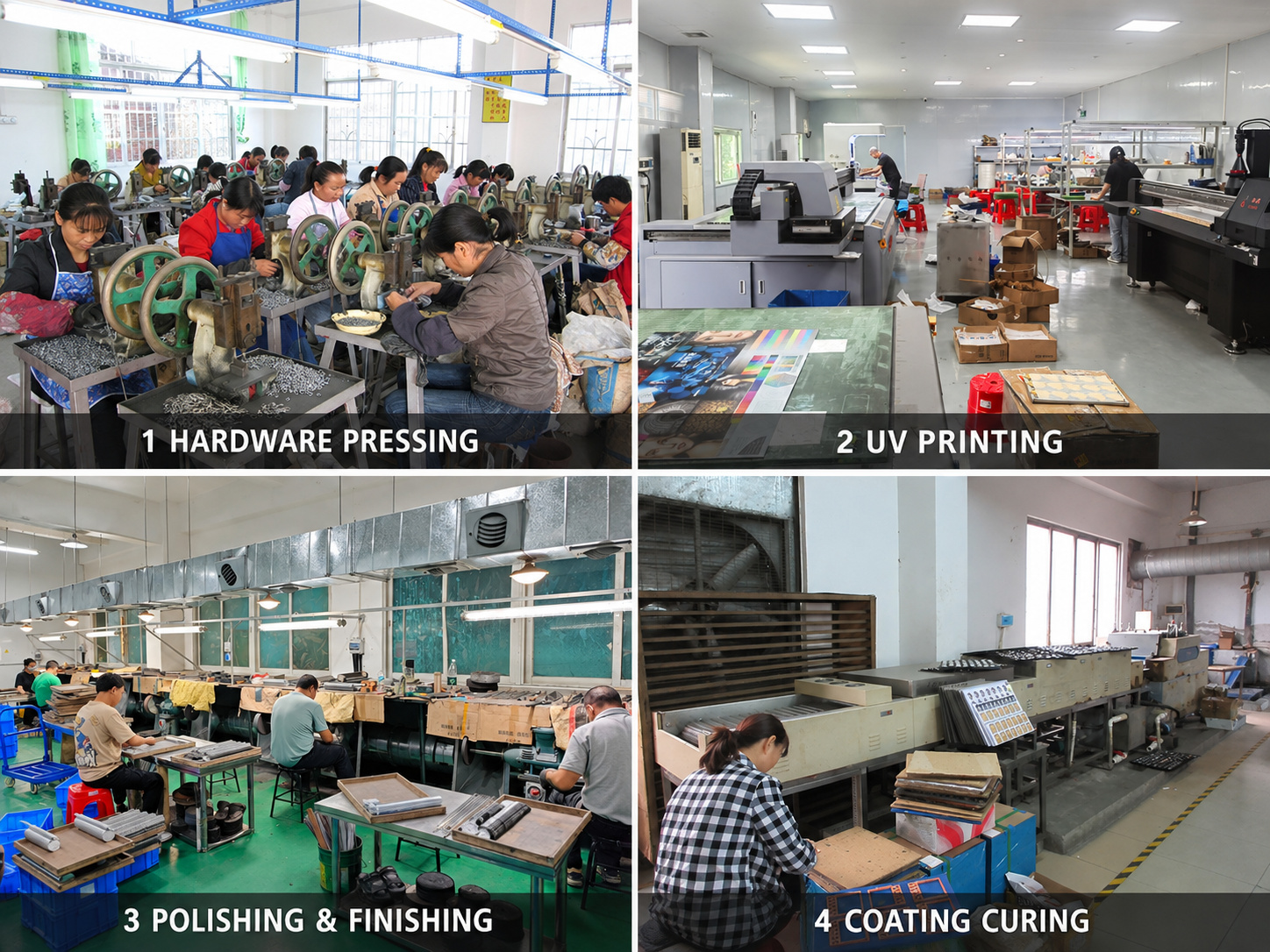
After the main parts are formed, they move to the required logo and finishing processes. Suitable methods may include engraving, laser marking, printing, embossing and molded logos.
Metal products may require polishing and surface finishing before or after logo application, depending on the product construction. The selected finish affects surface gloss, logo contrast, plating appearance and scratch visibility.
Printed acrylic products are checked for artwork alignment, print density and edge quality. Molded PVC and rubber products are reviewed for color placement, clean separation and complete formation. Leather products are checked for embossing or printing position, material condition and stitching where applicable.
 Assembly and In-Process Inspection
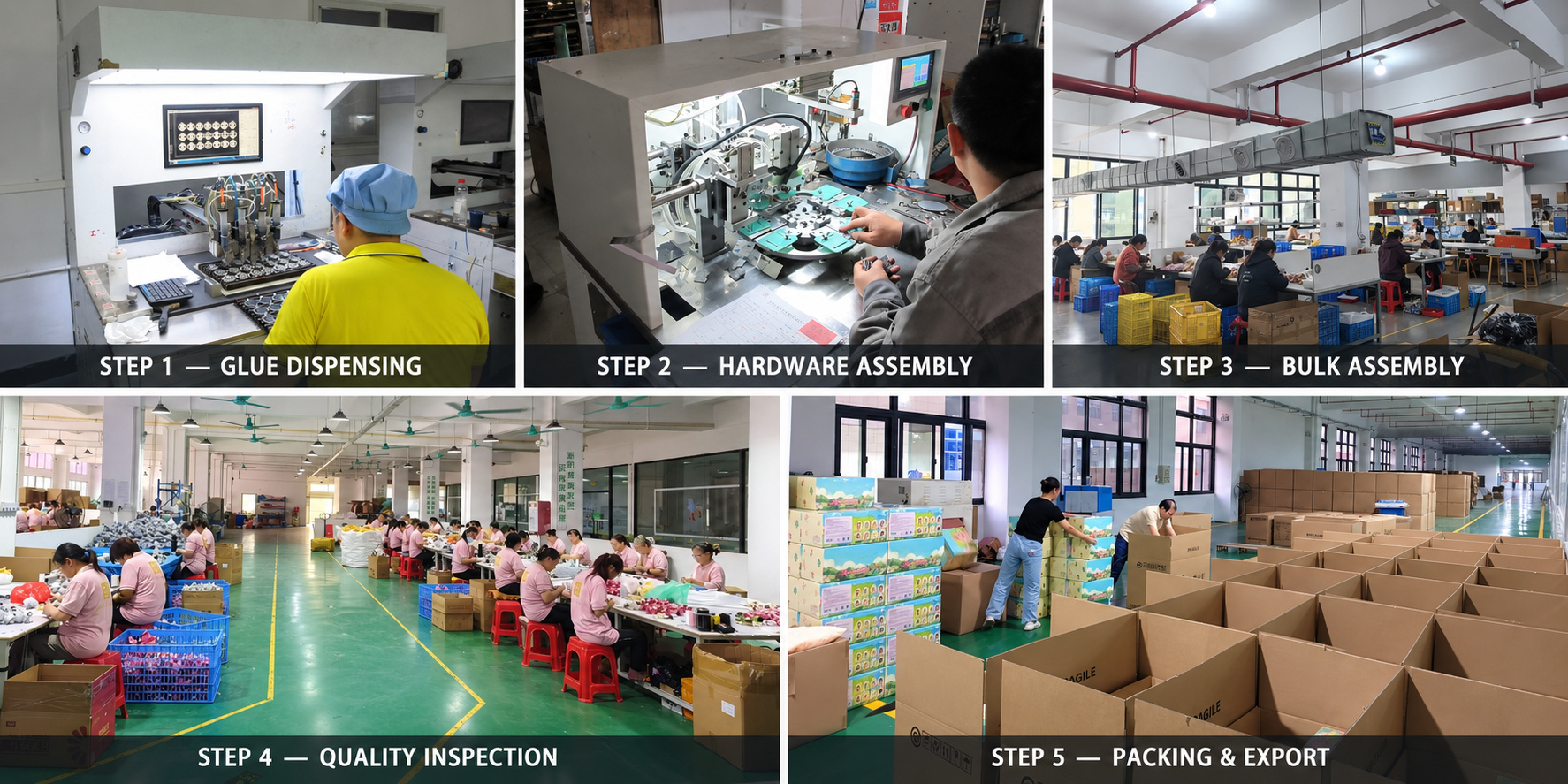
Key rings, chains, jump rings, clasps, hooks and other accessories are assembled after the main components and surface processes are completed. The attachment method must match the confirmed product structure and hanging direction.
During assembly, we check dimensions, logo orientation, attachment position, connector closure, chain length, surface condition and component fit. LED keychains also require function checks where applicable.
In-process inspection helps identify issues before the order reaches final packing. Incorrect accessories, open connector rings, surface damage, loose components or reversed logo orientation are easier to correct before the finished pieces are packed.
Final Inspection and Packing
Finished keychains are compared with the approved sample and written order specification. Inspection points can include:
- Material and product dimensions
- Shape and structural details
- Logo size, position and clarity
- Color and surface finish
- Key rings, chains and connectors
- Assembly condition and product function
- Individual packaging and labels
- Quantity and carton arrangement
Packing is checked for the correct bag, card, label, gift box, color box or other approved packaging. Custom printed packaging is compared with the confirmed artwork before shipment.
Material testing and third-party inspection can be arranged when required by the buyer or project.
Bulk Production and Shipment Preparation
Bulk production generally requires around 25–40 days after the sample and specifications are approved. The actual schedule depends on quantity, material, tooling, surface treatment, logo process, assembly requirements and packaging complexity.
Finished packages are placed into export cartons according to the confirmed packing specification. Carton quantity, dimensions, gross weight, shipping marks and labels are checked before shipment preparation.
Shipment terms can include EXW, FOB, CIF and DDP, depending on the destination and buyer requirements.
 Information Required Before Production
For an accurate production review, please provide:
- Artwork, technical drawing or reference sample
- Required material and product dimensions
- Order quantity for each design and color
- Logo method and surface finish
- Key ring, chain or accessory requirements
- Individual packaging and export packing
- Destination country or port
- Required testing or third-party inspection
- Preferred EXW, FOB, CIF or DDP shipping term
Standard custom orders generally start from around 500–1,000 pieces per design. Complex products, new tooling or private label programs may require approximately 1,000–3,000 pieces.
After reviewing the complete specification, we can advise on production feasibility, MOQ, tooling requirements, sample cost, sample time, bulk lead time, inspection and packing arrangements.