
Tooling Development Based on the Product Design
Custom molds are required when a keychain has a unique outline, molded logo, raised or recessed details, three-dimensional structure or specially positioned attachments. Mold development commonly applies to zinc alloy, soft PVC, rubber, silicone and injection-molded plastic keychains.
Flat acrylic, laser-cut metal and certain printed keychains may not require a conventional mold. However, cutting files, positioning fixtures or other production tools may still be needed.
Before tooling begins, the material, dimensions and basic construction should be confirmed through the material preparation stage.
Artwork and Structural Review
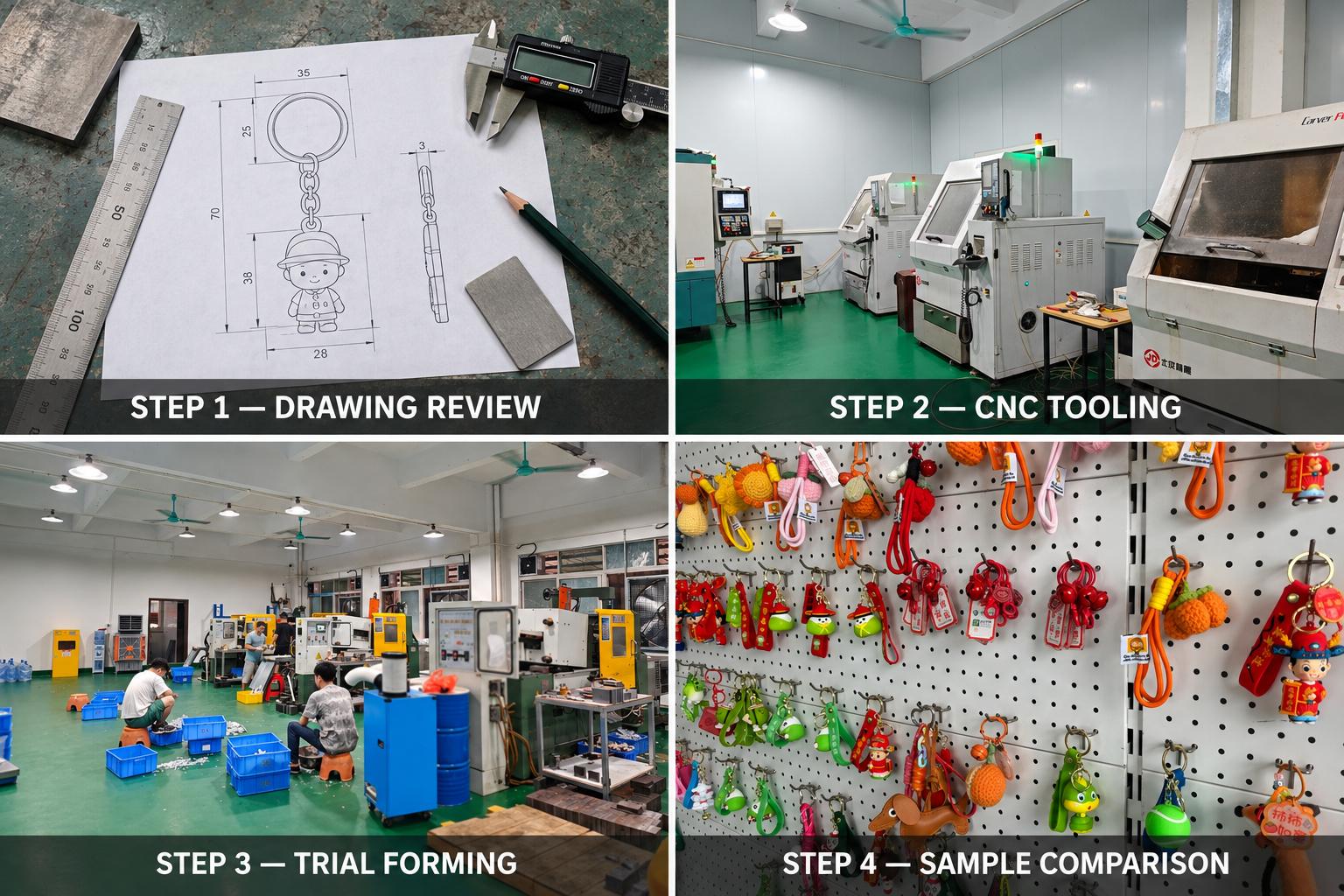
A logo file or reference image does not always provide enough information for mold production. We normally review:
- Overall length, width and thickness
- Front, back and side construction
- Flat, 2D or 3D requirements
- Raised and recessed details
- Logo dimensions and position
- Color separation for PVC or rubber designs
- Attachment hole and hardware position
- Required surface finish
- Expected order quantity
Vector artwork is preferred because it provides clear outlines and accurate proportions. A physical sample can also be reviewed when the required weight, relief, thickness or structure is difficult to communicate through artwork.
Very thin lines, deep recessed areas or details positioned too close to an edge may not mold consistently. If an adjustment is needed, it should be confirmed before tooling starts.
 Tooling for Different Materials
Zinc alloy keychains normally require a mold that reproduces the approved outline, thickness and dimensional details. The mold should account for metal flow, product release, shrinkage and subsequent polishing or plating after die casting.
Soft PVC, rubber and silicone molds are developed according to the outline, color areas and required relief. A 2D design commonly uses separate raised and recessed layers. A 3D design may require rounded surfaces and gradual depth transitions.
Injection-molded plastic parts require attention to wall thickness, fitting positions and assembly points. Products containing several molded components may need more than one mold or an additional assembly fixture.
Tooling Cost and Sample Time
Tooling cost depends on the material, product size, number of cavities, design depth, structural complexity and number of molded parts. The mold charge is normally quoted separately from the sample cost and bulk unit price.
Buyers should confirm whether the quotation includes the mold, trial sample, basic adjustment and sample shipping.
Custom samples normally require around 7–15 days. New tooling, complex 3D structures or multiple components may extend the development time. Major design changes after the mold has been completed can also increase cost and delay approval.
Trial Molding and First-Sample Inspection
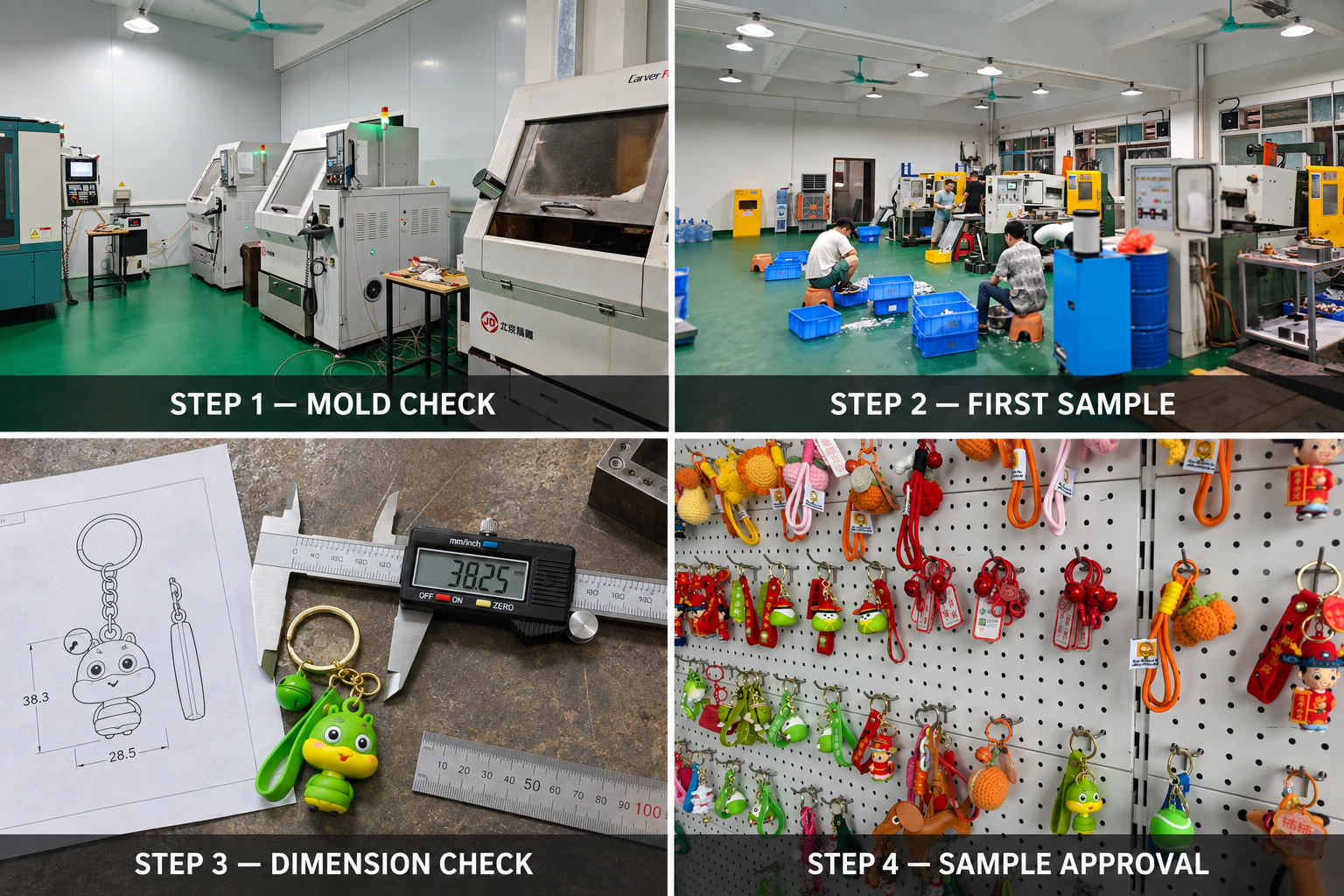
The first molded pieces are used to check whether the tooling produces the approved design. Inspection points may include:
- Product length, width and thickness
- Outline and edge definition
- Raised or recessed details
- Logo position and legibility
- Attachment hole location
- Part fitting and assembly
- Visible molding defects
- Suitability for subsequent finishing
Minor adjustments may be possible if the first sample does not match the drawing. Significant changes to the size, structure or artwork may require the mold to be reworked or replaced.
 Pre-Production Sample Approval
The completed sample should be reviewed for material, dimensions, shape, logo, colors, surface finish, accessories and packaging. For molded keychains, the buyer should also check logo depth, edge definition, product thickness and attachment position.
After approval, the sample and written specification become the reference for bulk production. If engraving or printing is required, the molded surface should also be checked for compatibility with the selected logo processing method.
MOQ and Bulk Production Handover
Standard custom keychain orders normally start from around 500–1,000 pieces per design. Complex molds, multiple components or private label programs may require approximately 1,000–3,000 pieces.
After approval, the confirmed tooling, material, dimensions, logo details, colors, hardware and packaging specifications are transferred to production. Bulk manufacturing normally requires around 25–40 days, depending on quantity, material and finishing requirements.
Information Required for a Tooling Quotation
Please provide:
- Vector artwork, drawing or physical sample
- Required material
- Product dimensions and thickness
- 2D or 3D construction
- Front and back details
- Logo and relief requirements
- Hardware and attachment position
- Estimated order quantity
- Target sample date
- Packaging requirements
Complete specifications allow us to evaluate mold feasibility, tooling cost, sample time, MOQ and the expected bulk production schedule before development begins.