
Forming Custom Keychain Components
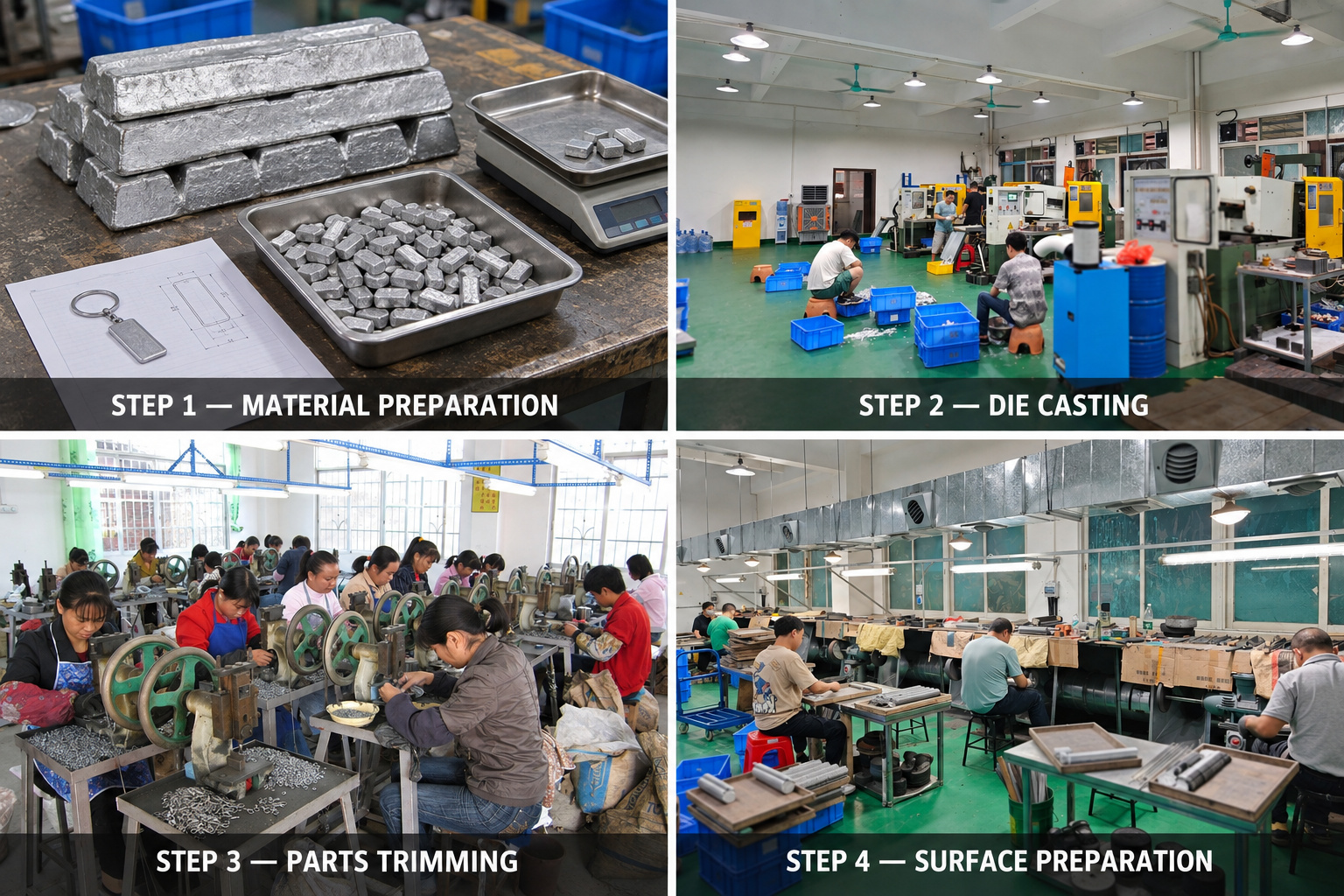
Die casting and injection molding are used to produce repeatable keychain bodies and components from approved tooling. Die casting is mainly used for zinc alloy keychains, while injection molding is suitable for soft PVC, rubber, silicone and certain plastic parts.
The correct method depends on the material, product structure, required detail, surface appearance and order quantity. Before forming begins, materials and dimensions should be confirmed through material preparation. New shapes must also complete mold and tooling development.
Production settings are established during the tooling trial. Bulk manufacturing starts after the pre-production sample and written specifications have been approved.
Zinc Alloy Die Casting
Zinc alloy is commonly selected for metal keychains with custom outlines, dimensional details and raised or recessed logos. During die casting, prepared metal is formed inside the approved mold to produce the basic keychain body.
Important production factors include:
- Mold condition and cavity details
- Metal flow into narrow areas
- Product thickness and weight
- Raised or recessed logo definition
- Attachment-hole position
- Part release and shrinkage
- Visible forming defects
Freshly formed metal parts may contain excess material, rough edges or surface marks. These parts require trimming and sorting before moving to polishing, plating or another surface finishing process.
 Injection Molding for PVC and Plastic Parts
Injection molding is used for soft PVC, rubber, silicone and suitable plastic keychain components. Prepared material enters the mold and follows the confirmed outline, thickness and molded details.
Soft PVC keychains may use separate colors and raised layers to create 2D or 3D effects. Color order, molded depth and edge definition should follow the approved sample. Plastic housings for LED or functional keychains require additional attention to wall thickness, component fitting and assembly positions.
Typical process controls include:
- Material and color confirmation
- Mold setup and cleanliness
- Filling consistency
- Product thickness
- Color separation
- Molded logo clarity
- Attachment position
- Part release and deformation
Unstable molding conditions can result in incomplete shapes, excess material, surface marks, unclear details or inconsistent dimensions.
First-Piece Confirmation
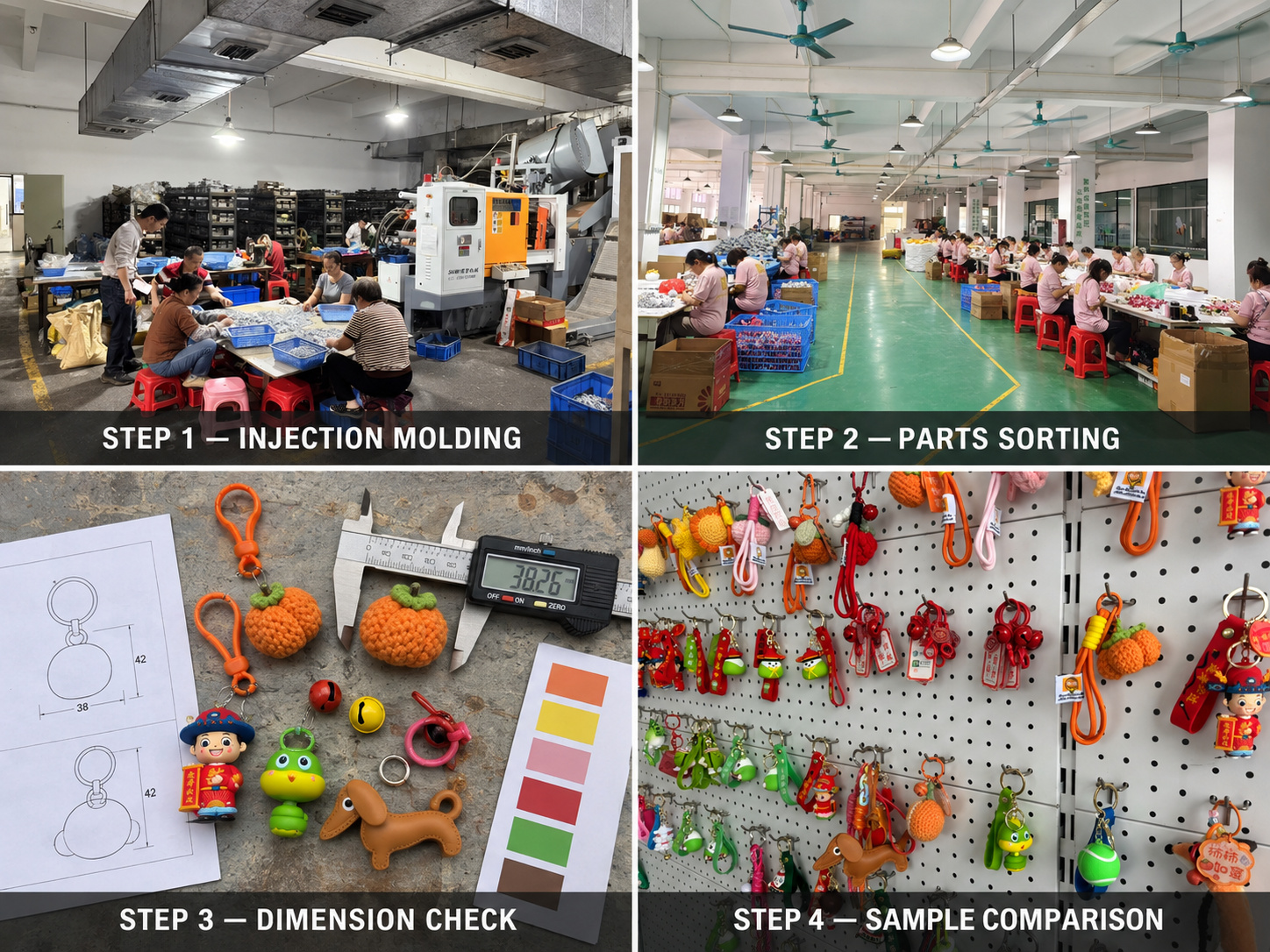
The first pieces produced after mold setup are checked before the full production run continues. They are compared with the approved sample, drawing and written specification.
Inspection normally covers overall size, thickness, product outline, molded details, logo position, color arrangement, attachment hole and visible surface condition. Components that will be fitted to rings, chains or internal parts should also be checked for assembly compatibility.
If the first pieces do not meet the approved requirements, the mold setup or production parameters should be adjusted before continuing.
 In-Process Inspection and Parts Sorting
Formed components are inspected and sorted during production rather than waiting until final packing. Depending on the material and construction, the team checks for:
- Incomplete or distorted shapes
- Excess material and rough edges
- Surface marks or contamination
- Incorrect or inconsistent colors
- Unclear molded logos
- Dimensional variation
- Damaged attachment holes
- Poorly fitting components
Accepted parts are separated for finishing, logo processing or assembly. Defective components should be isolated before they enter the next stage.
After forming and inspection, approved parts move to keychain assembly with the confirmed rings, chains, clasps or functional components.
Sample Approval and Bulk Production
A pre-production sample should confirm the material, dimensions, colors, molded details, logo, hardware and surface requirements. Once approved, the sample and specification become the reference for bulk production.
Custom samples normally require around 7–15 days, depending on tooling and design complexity. Bulk production usually requires around 25–40 days after approval. New molds, multicolor molding, multiple components or additional finishing may extend the schedule.
Standard custom orders normally start from around 500–1,000 pieces per design. Complex molds or private label programs may require approximately 1,000–3,000 pieces.
Factors Affecting the Quotation
Die casting and injection molding costs depend on:
- Product material and dimensions
- Product weight and material consumption
- Mold size and structural complexity
- Number of molded colors
- 2D or 3D design requirements
- Number of separate components
- Logo and surface finishing
- Order quantity and packaging
Tooling charges, sample costs and bulk unit prices should be identified separately where applicable.
Information Required for Production Review
For an accurate quotation, please provide:
- Artwork, drawing or physical sample
- Required material
- Product size and thickness
- 2D or 3D construction
- Molded logo and color details
- Hardware and assembly requirements
- Surface finish
- Packaging requirements
- Estimated order quantity
- Destination and inspection requirements
Send these details before sampling so we can review tooling feasibility, molding method, MOQ, sample time and the expected bulk production schedule.