
Preparing Keychain Surfaces for Finishing
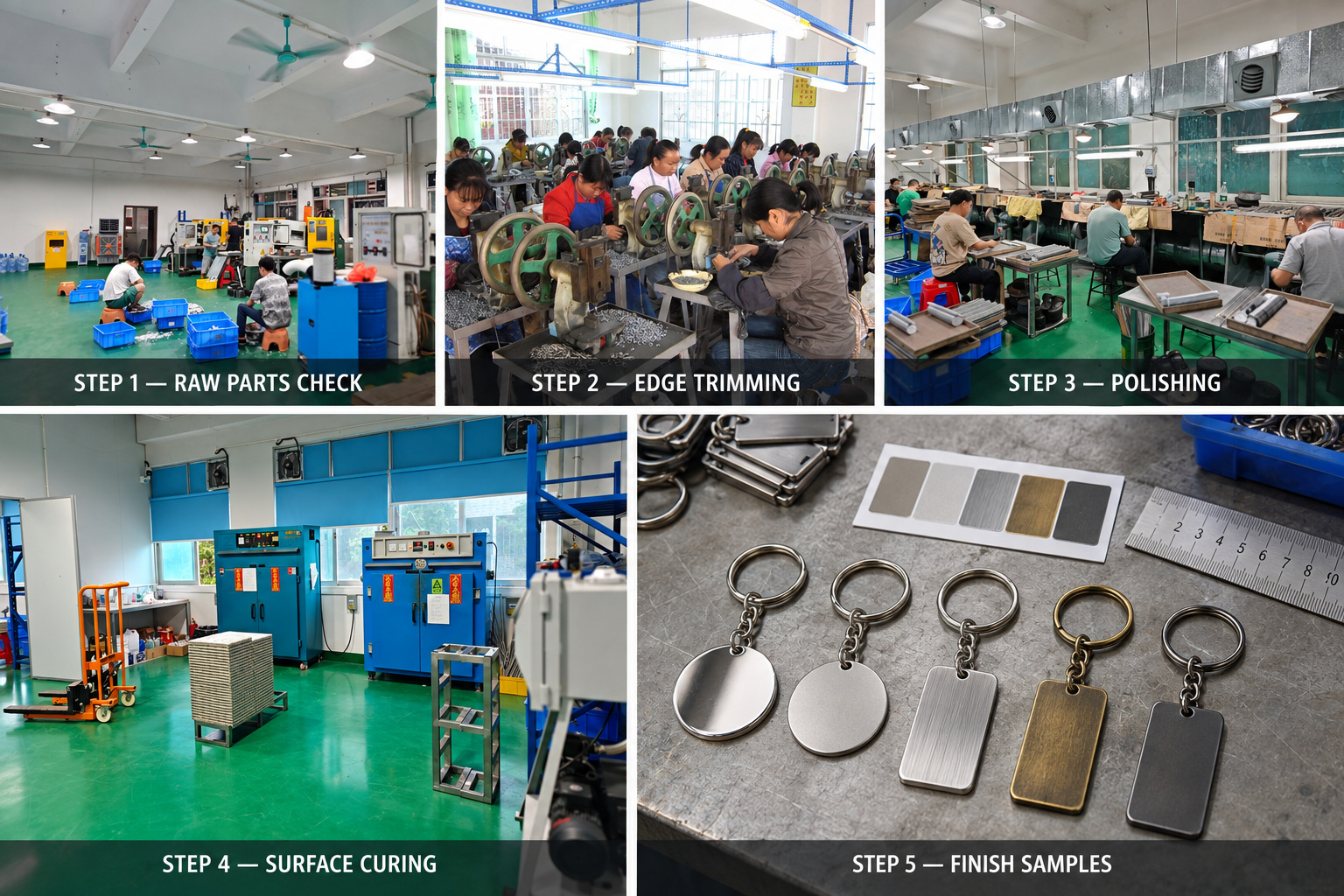
Polishing and surface finishing take place after metal keychain bodies have been formed, trimmed and sorted. These processes affect surface smoothness, edge condition, color, gloss, logo visibility and the overall appearance of the finished product.
The correct process depends on the base material, product shape, surface area, recessed details and approved finish. Zinc alloy, stainless steel and aluminum keychains may require different preparation methods.
Parts produced through die casting should be checked before polishing. Components with incomplete shapes, serious casting defects or incorrect dimensions should not proceed to finishing.
Trimming, Deburring and Edge Preparation
Freshly formed metal parts may have excess material, casting lines or rough edges. These areas must be treated before the decorative surface finish is applied.
Edge preparation may include:
- Removing excess material
- Smoothing casting lines
- Treating attachment holes
- Rounding specified edges
- Cleaning recessed areas
- Separating visibly damaged parts
The amount of preparation depends on the product shape and the required appearance. A simple flat keychain is easier to treat than a detailed 3D design containing narrow grooves, raised logos or curved surfaces.
Excessive polishing can reduce fine details or change product dimensions. Insufficient polishing may leave visible marks that remain noticeable after the final finish.
 Polished, Matte and Brushed Effects
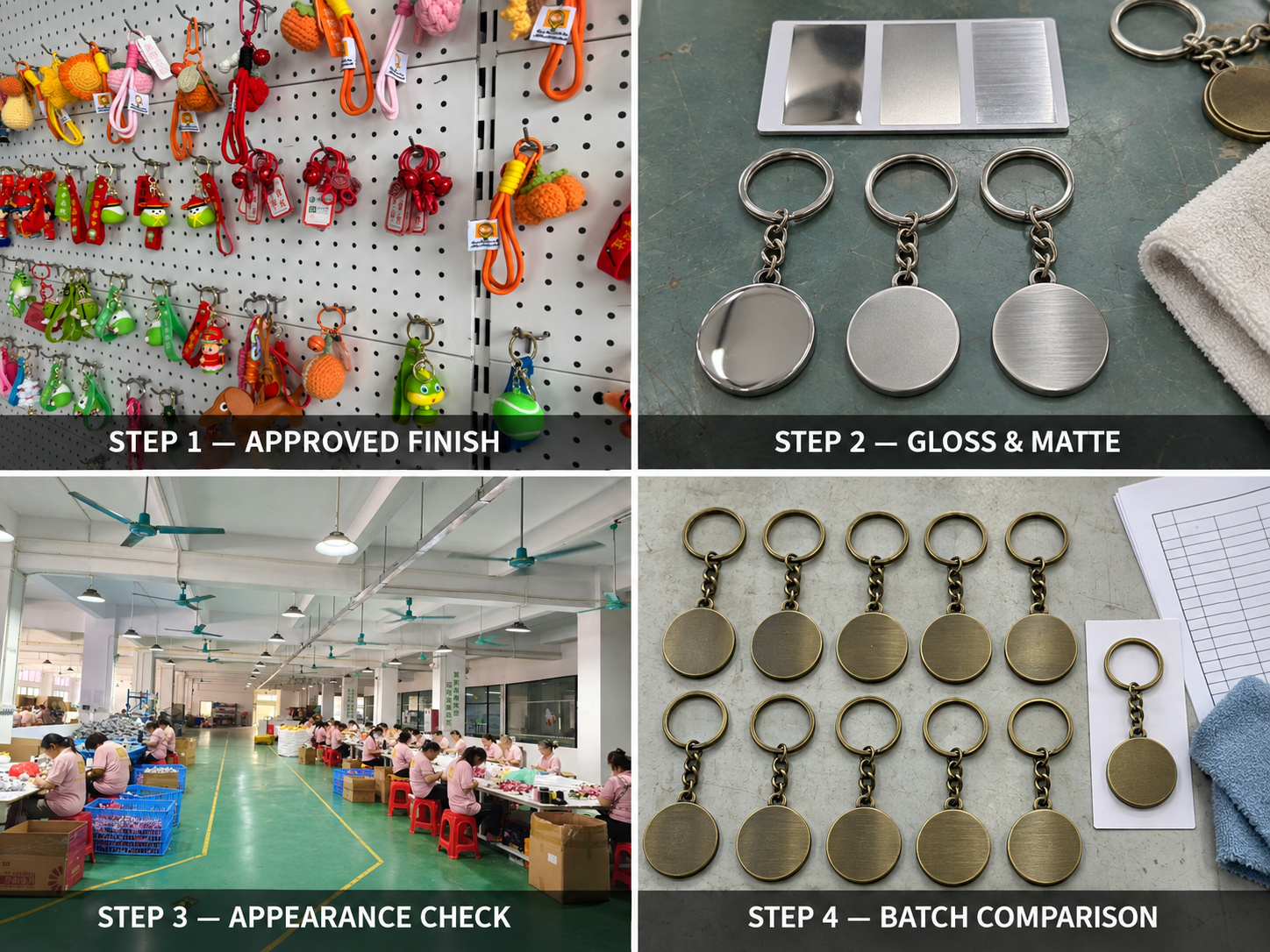
A polished finish creates a smoother and more reflective appearance. It is commonly selected for promotional products, gift programs and branded merchandise requiring a clean metal surface.
Matte finishes reduce strong reflections and can give the keychain a more restrained appearance. Brushed finishes show controlled directional lines and are more suitable for certain flat metal surfaces than highly detailed molded products.
The appearance can vary according to:
- Base metal
- Surface smoothness
- Product shape
- Plating or coating color
- Logo process
- Lighting conditions
- Acceptable production tolerance
Buyers should review physical samples rather than relying only on digital images. Screen colors and rendered drawings cannot accurately represent gloss, texture or metal reflection.
Surface Color and Finish Selection
Metal keychains may use different surface colors and effects depending on their material and design. The selected finish should support the intended logo method and product application.
A highly reflective surface may make shallow engraving less visible under some lighting conditions. Matte or brushed surfaces may provide clearer contrast for certain laser-marked logos. Recessed logos and colored details should also be reviewed together with the surrounding metal finish.
Buyers can compare practical appearance options through our color and surface finish page.
If an exact finish is required, the buyer should provide a reference sample, finish description or approved physical example. Terms such as silver, gold, antique or matte can refer to different visual results and should not be used as the only production specification.
Cleaning and Pre-Production Sample Approval
Metal parts should be cleaned before final inspection or additional logo processing. Polishing residue, oil, dust and loose particles can affect appearance, printing adhesion and packing cleanliness.
The pre-production sample should be checked for:
- Overall surface color
- Gloss or matte level
- Polishing consistency
- Edge smoothness
- Casting marks and scratches
- Recessed-area cleanliness
- Logo visibility
- Front and back appearance
Surface finish approval should take place under normal lighting. Photographs can support confirmation, but they may not reproduce metal color and reflection accurately.
 Inspection During Bulk Production
Finished parts are compared with the approved sample and written specification. Inspection points may include:
- Surface color and finish consistency
- Visible scratches or dents
- Uneven polishing
- Rough edges
- Stains or residue
- Finish coverage around recessed areas
- Logo clarity and contrast
- Differences between production batches
Parts with obvious surface defects should be separated before hardware assembly. Approved components can then proceed to keychain assembly with the confirmed rings, chains and fittings.
When engraving or printing is required after finishing, the surface should also be checked for compatibility with the selected logo processing method.
MOQ, Sampling and Lead Time
Standard custom keychain orders normally start from around 500–1,000 pieces per design. Complex finishes, several surface colors or private label programs may require approximately 1,000–3,000 pieces.
Custom samples generally require around 7–15 days, depending on tooling, material and finish requirements. Bulk production usually requires around 25–40 days after the sample and written specifications are approved.
Special finishes, repeated color adjustments or products requiring several finishing stages may extend the production schedule.
Information Required for a Finishing Quotation
Please provide:
- Keychain material and dimensions
- Product drawing or reference sample
- Required surface color
- Polished, matte, brushed or other finish
- Logo process and position
- Front and back requirements
- Estimated order quantity
- Packaging requirements
- Approved physical reference where available
- Destination and inspection requirements
Clear finish requirements allow us to review production feasibility, sample cost, MOQ, appearance control and expected lead time before bulk manufacturing.