
Assembly Based on the Approved Specification
Keychain assembly connects the finished product body with the specified key ring, chain, connecting ring, clasp or functional component. Although the parts may appear simple, incorrect accessory sizes, weak connections or inconsistent assembly can affect product appearance and practical use.
Assembly begins only after the keychain body, logo, color and surface finish have passed the relevant production checks. Metal parts should complete polishing and surface finishing before assembly to reduce the risk of scratches, contamination or finish differences.
The approved sample and written specification are used to confirm which accessories belong to each order.
Key Rings, Chains and Connecting Parts
Common keychain hardware includes split rings, chains, jump rings, eye screws, lobster clasps, swivel hooks and other suitable fittings. The selected accessory depends on the keychain material, weight, attachment position and intended application.
Before assembly, we confirm:
- Key ring diameter and wire thickness
- Chain style and required length
- Connecting-ring size
- Clasp or hook type
- Hardware color and surface finish
- Attachment position and direction
- Required movement or rotation
- Compatibility with the keychain body
A large or heavy keychain may require stronger hardware than a lightweight acrylic or PVC product. Small attachment holes can also limit the ring or connector size that can be used.
Buyers can review available configurations through our key rings and accessories page.
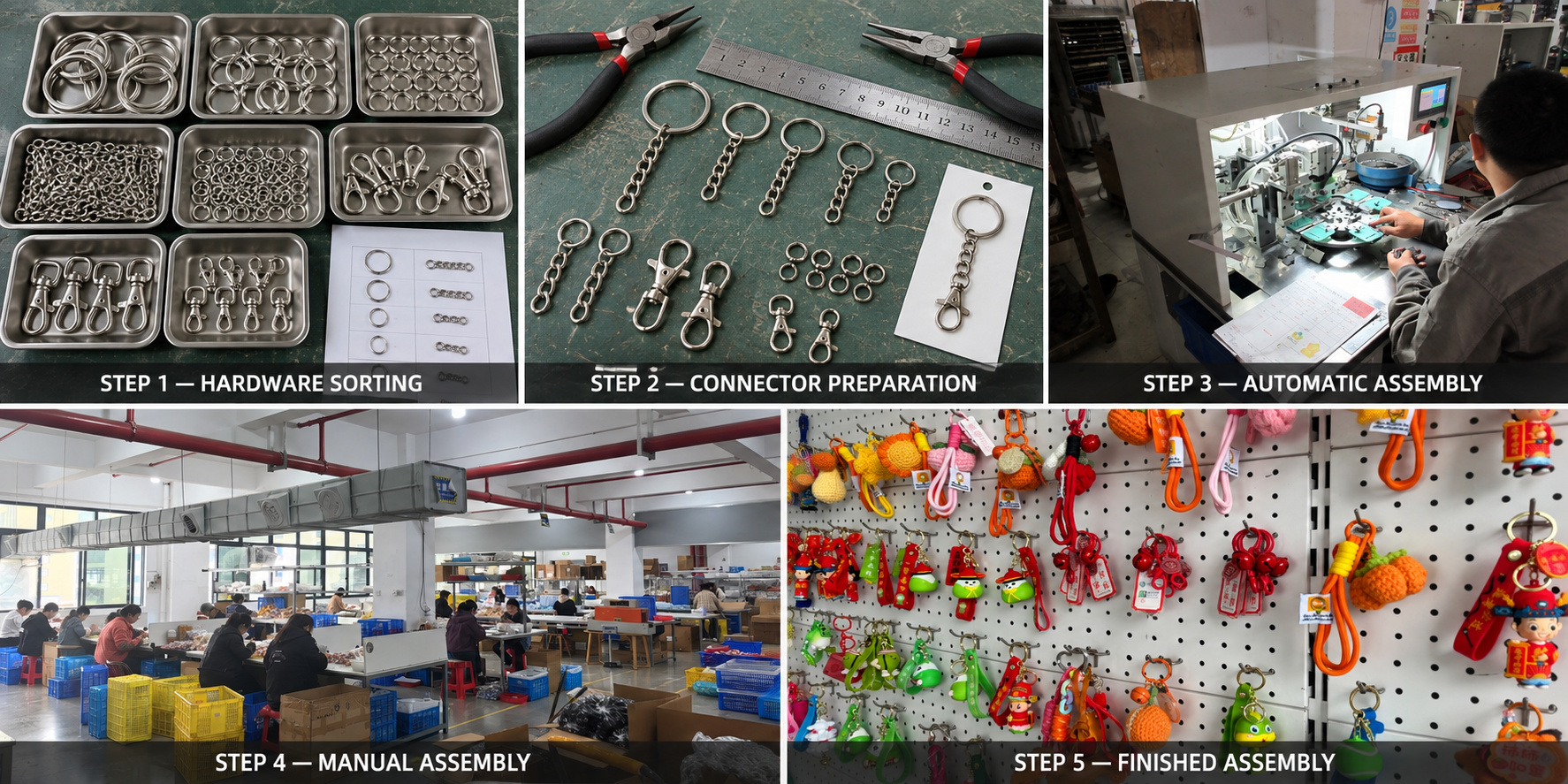 Preparing Components Before Assembly
Keychain bodies and hardware are sorted according to the approved order specification. Components with visible damage, incorrect finishes or unsuitable dimensions should be separated before assembly begins.
For metal keychains, the surface should be checked for scratches, stains and plating differences. PVC, rubber and acrylic products should be checked around the attachment hole or molded loop. Leather keychains may require confirmation of folded parts, stitching or hardware placement.
Logos and printed details should also be checked before the hardware is attached. Products with incorrect branding should not proceed to final assembly. Logo requirements can be reviewed through our engraving, printing and logo processing page.
Hardware Attachment and Closing
The assembly method depends on the product construction. Split rings may be connected directly to a molded or drilled attachment point, while other designs use a chain, eye screw or intermediate connecting ring.
Connecting rings should be closed without leaving an excessive opening. Chains should follow the approved link count or length. Hooks and swivel fittings should face the correct direction and move freely after installation.
During assembly, attention is given to:
- Ring and chain orientation
- Connecting-ring closure
- Attachment security
- Chain length
- Hardware color consistency
- Movement of swivel components
- Protection of finished surfaces
- Overall product alignment
Tools and fixtures should be used carefully to avoid scratching polished or printed surfaces.
Assembly of Functional Keychains
LED and other functional keychains require additional component checks. Internal parts, housings, switches, batteries and external hardware must fit the approved structure.
Where applicable, inspection may include:
- Switch movement
- LED activation
- Light output
- Battery installation
- Housing closure
- Component fit
- Hardware attachment
- Visible gaps or deformation
Functional testing should take place before packing because faults are more difficult to correct after products have been sealed in retail or custom packaging.
In-Process Assembly Inspection
Assembly is checked during production rather than waiting until the full order is completed. Inspectors compare finished pieces with the approved sample and written specification.
Typical checkpoints include:
- Correct accessory type
- Ring and chain dimensions
- Attachment position
- Secure connecting-ring closure
- Product orientation
- Surface condition
- Logo direction
- Function where applicable
Incorrect components, loose connections or scratched products should be separated for correction or replacement.
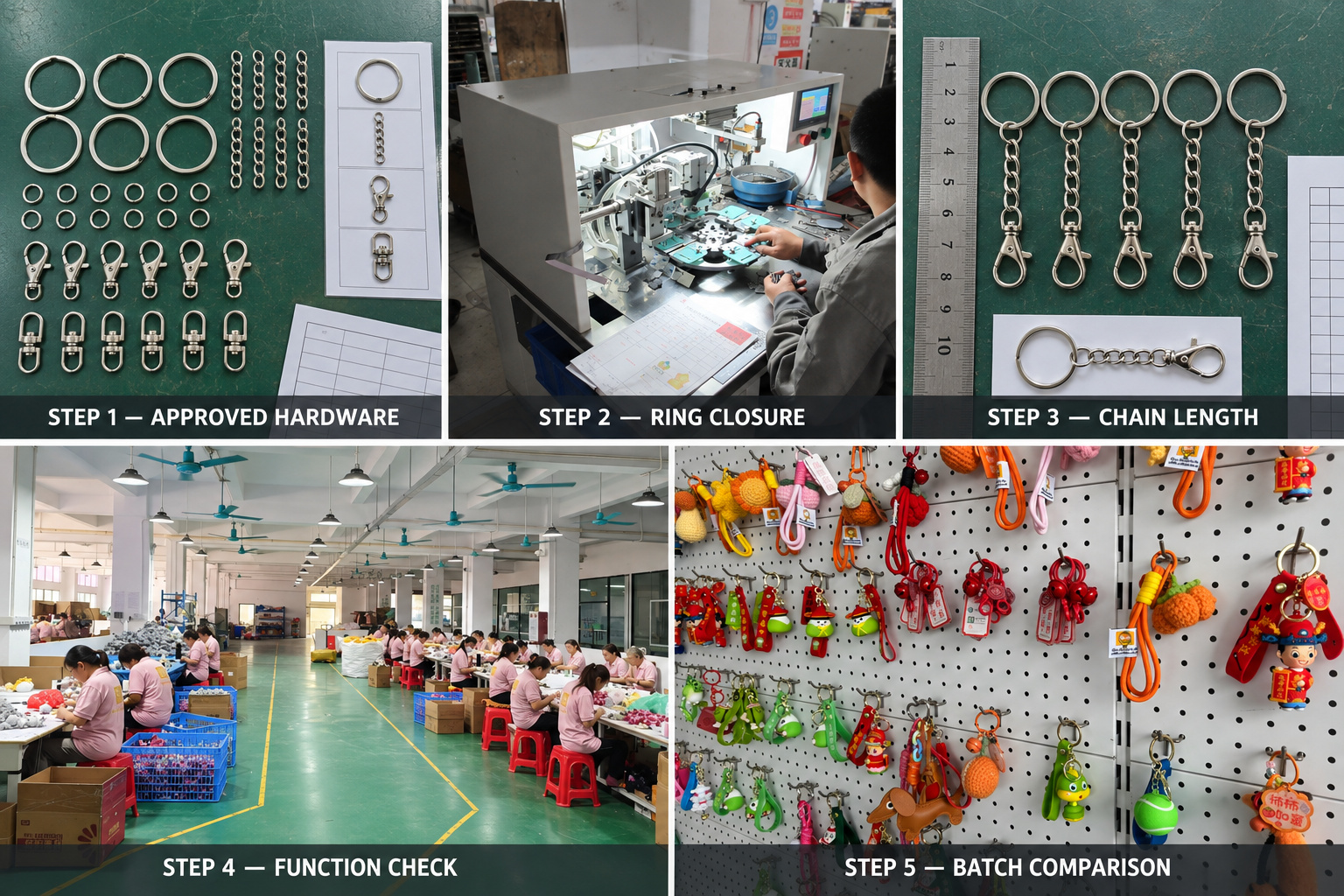 Approved Sample and Batch Consistency
The approved sample defines the expected combination of keychain body, logo, surface finish, hardware and assembly direction. Bulk pieces should be compared with this sample during production.
For repeat orders, previous specifications should be reviewed before purchasing hardware. Rings and chains that appear similar may differ in diameter, thickness, color or surface finish.
If a buyer changes the accessory after sample approval, the replacement part should be confirmed before full assembly. A change in ring size or chain length may also affect product balance, packing dimensions and unit cost.
Packing Handover After Assembly
Completed keychains are counted and transferred to final inspection and packing. Products should be clean, correctly oriented and free from loose components before entering individual bags, paper cards, gift boxes or custom retail packaging.
The packing team follows the approved quantity, packaging method, label position and carton requirements. Buyers requiring branded packaging can review our private label and packaging options.
MOQ, Sample Time and Lead Time
Standard custom keychain orders normally start from around 500–1,000 pieces per design. Special hardware, functional components or private label packaging may require approximately 1,000–3,000 pieces.
Custom samples usually require around 7–15 days, depending on the material, tooling and assembly structure. Bulk production normally requires around 25–40 days after sample and specification approval.
Non-standard rings, custom chains, special finishes or functional components can affect MOQ, sample time and production scheduling.
Information Required for an Assembly Quotation
Please provide:
- Keychain material and dimensions
- Artwork or approved sample
- Required key ring size
- Chain type and length
- Connecting rings, clasps or hooks
- Hardware color and finish
- Attachment position
- Functional requirements
- Order quantity
- Packaging and destination
Complete specifications allow us to confirm accessory compatibility, assembly method, sample requirements, MOQ and the expected production lead time.